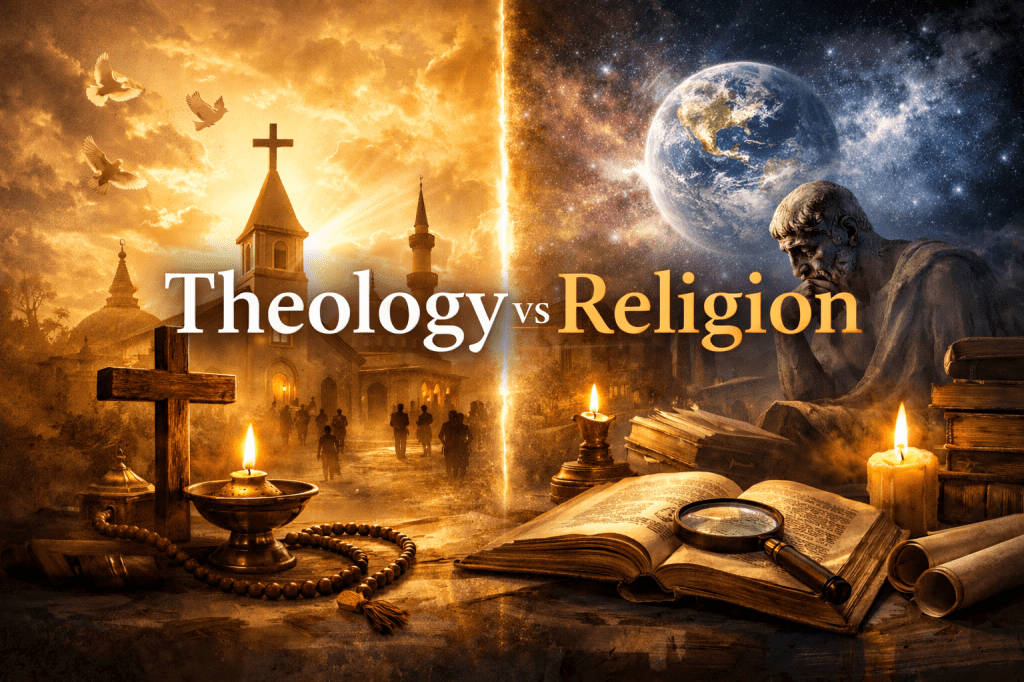
The Difference Between Theology and Religion
By The Most Reverend Dr. Kelvin Simmons, D.Div.
Certified Bishop and Imam • Universalist Theologian • 2018 Cancer Survivor
Founder & Director, New Hope Theological Society
Understanding Belief vs. the Study of Belief
In everyday conversation, the words theology and religion are often used as if they mean the same thing. They don’t. Understanding the difference isn’t just academic—it can change how you see faith, spirituality, and even your own personal journey.
Let’s break it down plainly.
Religion is practice.
What Is Religion?
It’s the structured expression of belief through:
- Rituals
- Traditions
- Worship services
- Rules and moral codes
- Community identity
Religion is what people do.
It shows up in churches, mosques, temples, ceremonies, holidays, and cultural customs. It creates belonging. It provides structure. It tells people how to live, behave, and relate to the divine (or ultimate reality).
Examples of religion:
- Christianity
- Islam
- Judaism
- Buddhism
- Hinduism
Each has its own system of beliefs and practices.
What Is Theology?
Theology is study and interpretation.
It asks deeper questions like:
- Who or what is God?
- What is truth?
- Why does suffering exist?
- What is the nature of justice, love, and purpose?
Theology is what people think about.
It’s the intellectual, philosophical, and often spiritual exploration of belief systems. Theology doesn’t just accept ideas—it examines them, challenges them, and expands them.
Theologians analyze sacred texts, question doctrines, and interpret meaning across time and cultures.
The Core Difference
Here’s the simplest way to understand it:
- Religion = Practice
- Theology = Reflection
Religion tells you what to believe and how to live.
Theology asks why those beliefs exist and whether they hold up.
Religion is the system.
Theology is the investigation of the system.
Why This Difference Matters
This distinction matters more than people realize.
Many conflicts, misunderstandings, and even personal struggles with faith come from confusing the two.
- Someone may reject religion because of rigid rules—but still crave theological truth.
- Another may follow religion faithfully without ever questioning its foundations.
- Some people step outside organized religion entirely but remain deeply theological in their thinking.
Understanding the difference gives you freedom.
Freedom to:
- Question without fear
- Believe without blind acceptance
- Grow beyond inherited traditions
- Build a personal relationship with truth
The Role of Theology in a Modern World
In today’s world, theology is more important than ever.
Why?
Because we live in a time where:
- Information is everywhere
- Authority is questioned
- Cultures are blending
- Traditional systems are evolving
Theology allows individuals to:
- Reinterpret ancient teachings for modern life
- Bridge gaps between different faiths
- Explore spirituality beyond institutional boundaries
This is where approaches like interfaith dialogue and universalist theology come into play—focusing not on division, but on shared truth and human connection.
Religion Without Theology… and Theology Without Religion
Both can exist independently—but each has consequences.
Religion without theology:
- Can become rigid
- Can resist growth
- Can enforce rules without understanding
Theology without religion:
- Can become abstract
- Can lack community
- Can drift without grounding
The most balanced approach often lies somewhere in between.
Final Thought
You don’t have to choose between theology and religion—but you should understand the difference.
Religion may guide your actions.
Theology shapes your understanding.
One gives you structure.
The other gives you depth.
And when both are aligned, they can create something powerful:
A faith that is not just inherited—but understood, examined, and truly your own.
Support the Mission
About the Author
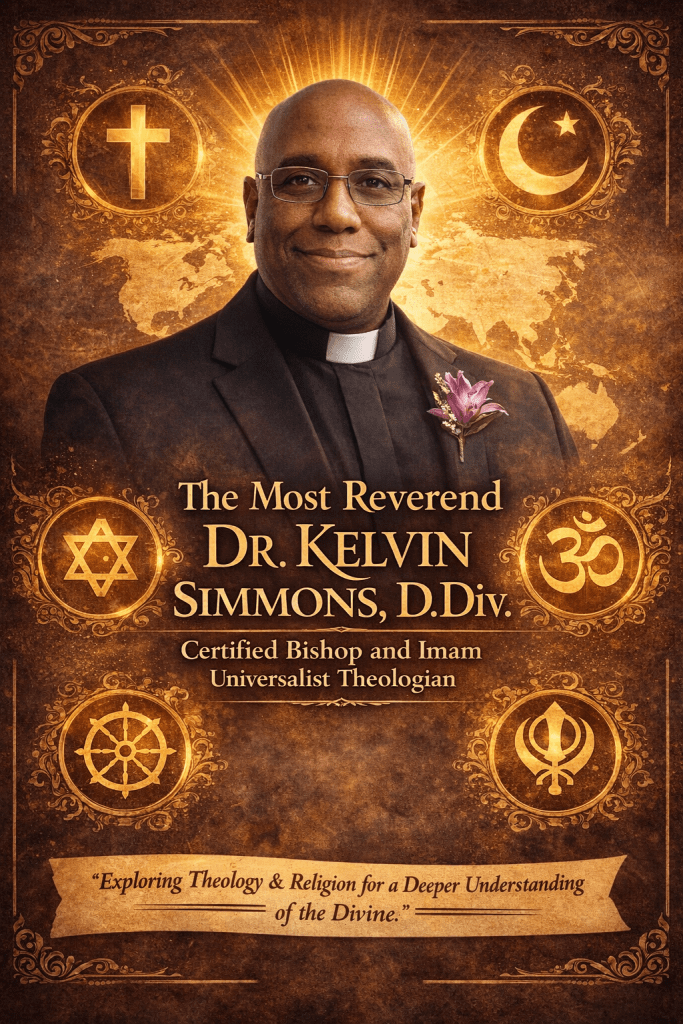
The Most Reverend Dr. Kelvin Simmons, D.Div., Certified Bishop and Imam, Universalist Theologian, 2018 Cancer Survivor.


Leave a Reply