This platform examines theology through history, context, and analysis—not blind acceptance.
The content presented here may challenge long-held beliefs, institutional narratives, and traditional interpretations.
It is not intended to attack—but to question, explore, and restore understanding.
Universalist Theology: Before Religion Had a Name;
Pre-Christian, Pre-Islamic, Pre-Judaic Foundations of Spiritual Truth
Introduction: Before Institutions, There Was Understanding
Long before the rise of structured religion—before Christianity, Islam, or Judaism—humanity was already deeply spiritual.
Not divided.
Not categorized.
Not institutionalized.
What existed instead was something far more raw, more connected, and arguably more truthful:
👉 Universalist Theology — the recognition that divine truth is not owned, controlled, or confined.
This blog is not about religion.
It’s about what came before religion.
The First Theology: Nature, Cosmos, and Consciousness
Early humans didn’t read doctrine—they observed existence.
They studied:
The movement of the stars
The cycles of life and death
The power of the sun, moon, water, and earth
From this came a foundational understanding:
👉 Life is interconnected.
👉 Energy transforms, but never disappears.
👉 The unseen is just as real as the seen.
This wasn’t religion.
This was awareness.
Ancestral Knowledge: The First “Scriptures”
Before written texts, knowledge was passed through:
Oral traditions
Symbolism
Rituals tied to nature
Ancestral communication
Across continents—from Africa to the Americas, from Asia to Europe—civilizations shared common themes:
Respect for ancestors
Balance with nature
Recognition of spiritual realms
Duality of existence (physical + unseen)
No centralized authority.
No “one true path.”
Just shared human understanding expressed differently.
Many Gods or One Source? The False Divide
Later religions often framed belief systems as:
Monotheism (one God)
Polytheism (many gods)
But early theology didn’t operate in those boxes.
Instead, people understood:
👉 Multiple expressions… of one universal source.
👉 Different energies… representing different aspects of existence.
What modern systems call “many gods” was often:
✔ Symbolism
✔ Personification of natural forces
✔ Cultural language describing the same universal truth
Spiritual Roles Before Clergy Systems
Before priests, pastors, imams, and rabbis—there were:
Shamans
Healers
Elders
Spiritual guides
These individuals didn’t control access to truth.
They:
Interpreted experiences
Guided communities
Maintained balance
There was no hierarchy claiming exclusive authority over the divine.
👉 Spirituality was shared—not owned.
The Shift: When Theology Became Religion
At some point, power entered the equation.
Belief systems began to transform into:
Institutions
Political tools
Systems of control
This shift introduced:
Doctrine enforcement
Religious hierarchy
“Right vs. wrong belief” frameworks
What was once universal became:
👉 Divided
👉 Codified
👉 Controlled
Universalist Theology: Reclaiming the Original Understanding
Universalist theology is not a new idea.
It’s a return.
A return to:
Interconnected truth
Shared human spirituality
Freedom from institutional limitations
It recognizes:
✔ Truth exists across cultures
✔ No single system owns the divine
✔ Spiritual understanding evolves, but its roots remain the same
Final Thought: Truth Was Never Meant to Be Owned
Before religion, there was no competition for belief.
No division over doctrine.
No claim of exclusive access to truth.
There was only:
👉 Observation
👉 Experience
👉 Connection
And maybe that’s the real question:
Did humanity evolve spiritually…
or did it move further away from its original understanding?
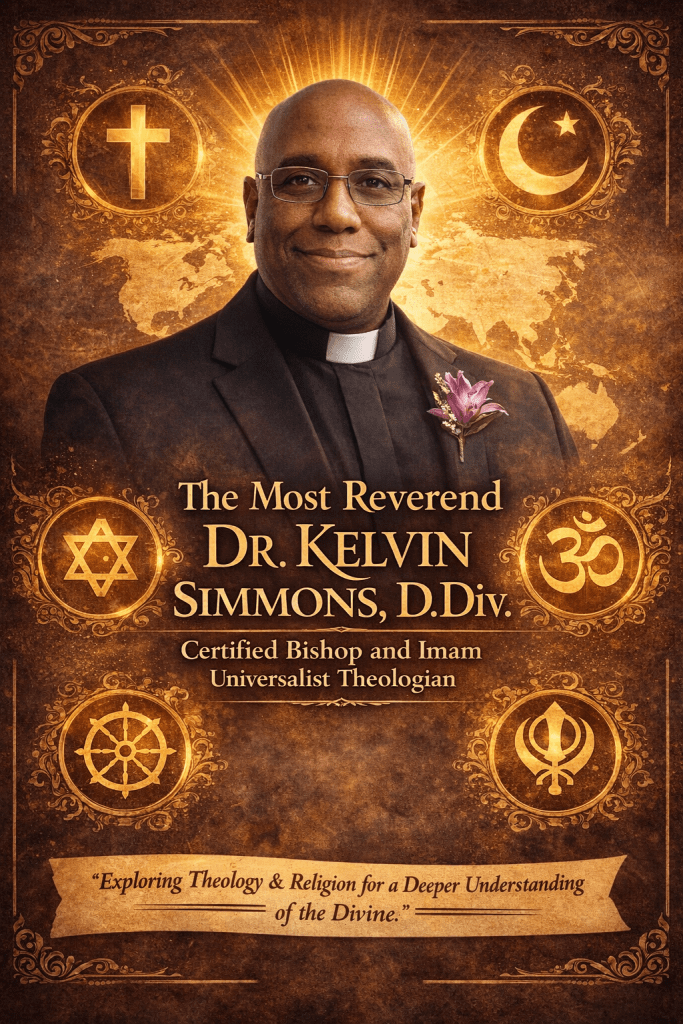
👉 Founder, New Hope Theological Society
Support the Mission
The New Hope Theological Society (NHTS) is committed to restoring awareness of original theological understanding—beyond institutional boundaries.
If this message resonates:
👉 Support the movement
👉 Share the knowledge
👉 Help expand this platform globally
 New Hope Thological Society (NHTS)